Primer Calculator: How Much Primer Do I Need?
Primer coverage depends on how thirsty the surface is. Pick the surface and we set a realistic coverage, then work out the cans for your room.
Your estimate
Buy 1.5 gallons
1 × 1 gal + 2 × quart of primer for new drywall
- Area to prime
- 365 sq ft
- Openings subtracted
- − 51 sq ft1 door, 2 windows
- Primer needed
- 1.34 gal
- Coverage
- 300 sq ft/galnew drywall
- Extra primer
- 10%
Add a price per gallon to see the cost.
How we got this: 365 sq ft × 1 coat ÷ 300 sq ft/gal × 1.10 = 1.34 gal, rounded up to 1 × 1 gal + 2 × quart.
Ask the store to tint the primer toward your finish color. It helps a dark or bright topcoat cover in fewer coats.
How the calculation works
- Area. Walls (perimeter × height) minus your doors and windows (width × height × number), plus the ceiling if you include it.
- Coverage by surface. About 300 sq ft per gallon on new drywall or bare wood, 350 on painted walls and 200 on masonry, because porous surfaces soak primer in.
- Cans. Area × coats ÷ coverage, plus 10%, rounded up to whole cans.
Imperial example: a 12 × 14 ft room with 8 ft walls, one door and two windows has 365 sq ft of new drywall. One coat at 300 sq ft per gallon plus 10% is 1.34 gallons: a gallon and two quarts. Add the ceiling and it is 2 gallons.
Metric example: a 4 × 5 m room with 2.5 m walls and the ceiling is 61.7 m² of plasterboard. At 7.4 m² per liter plus 10% that is 9.2 L: one 10 L tin.
Guides to save and share
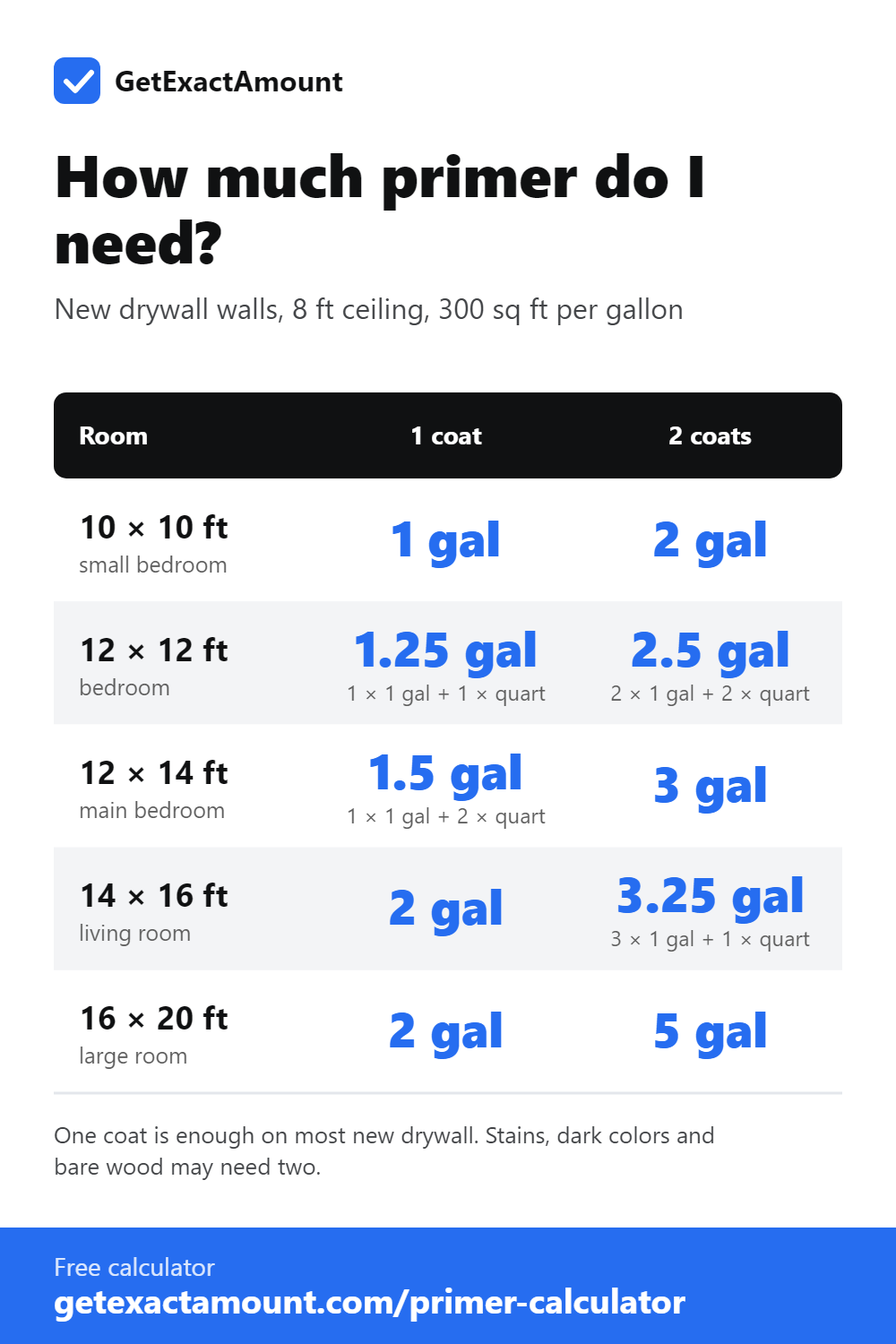
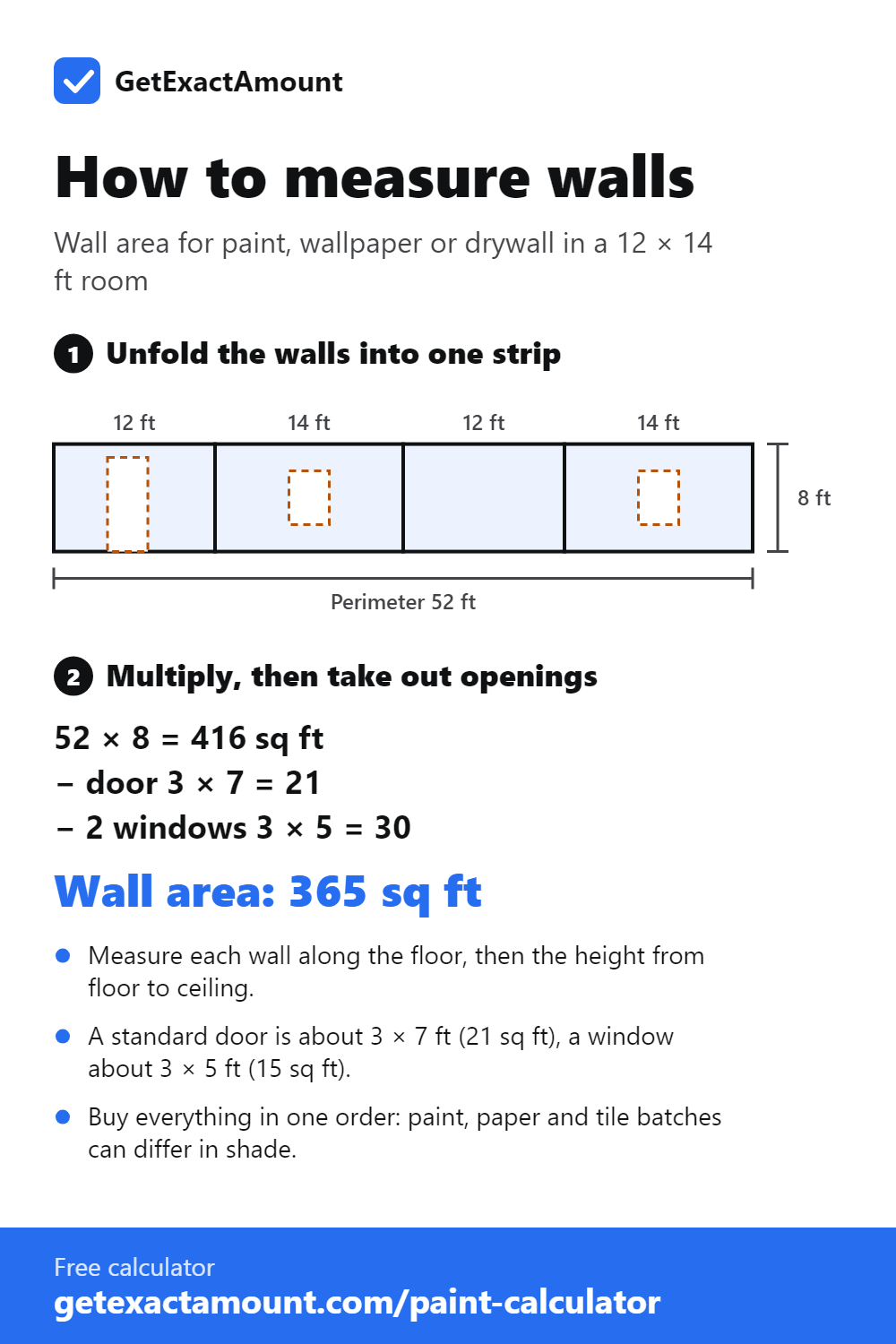
Chart as a table: How much primer do I need?
| Room | 1 coat | 2 coats |
|---|---|---|
| 10 × 10 ft (small bedroom) | 1 gal | 2 gal |
| 12 × 12 ft (bedroom) | 1.25 gal (1 × 1 gal + 1 × quart) | 2.5 gal (2 × 1 gal + 2 × quart) |
| 12 × 14 ft (main bedroom) | 1.5 gal (1 × 1 gal + 2 × quart) | 3 gal |
| 14 × 16 ft (living room) | 2 gal | 3.25 gal (3 × 1 gal + 1 × quart) |
| 16 × 20 ft (large room) | 2 gal | 5 gal |
When do I need primer?
| Surface | Primer? | Typical coverage |
|---|---|---|
| New drywall or plaster | Yes, always | 300 sq ft/gal (7.4 m²/L) |
| Painted walls in good condition | Only on patches and stains | 350 sq ft/gal (8.6 m²/L) |
| Bare or knotty wood | Yes, stain-blocking for knots | 300 sq ft/gal (7.4 m²/L) |
| Brick, block, stucco | Yes, masonry primer | 200 sq ft/gal (4.9 m²/L) |
Common mistakes
- Skipping primer on new drywall. Joint compound and paper absorb paint differently, so joints show through.
- Using a paint-and-primer product on bare drywall. It helps over sound paint but does not seal new surfaces.
- Priming fresh masonry too early. New concrete and stucco need about a month to cure.
- Leaving primer white under a dark color. A tinted primer saves a coat.
What else you'll need
- A roller and tray, and a brush for edges.
- Spackle and sandpaper for patches before priming.
- Stain-blocking (shellac or oil-based) primer for water marks, smoke and wood knots.
- Your finish paint: see the Paint Calculator.
Frequently asked questions
How much primer do I need?
Divide the area by the coverage for your surface and add 10%. 365 sq ft of new drywall at 300 sq ft per gallon needs about 1.3 gallons.
Do I need to prime painted walls?
Usually only spot-prime repairs and stains. Prime the whole wall when switching from oil to latex, or from a dark color to a light one.
How many coats of primer?
One is enough for most surfaces. Use two over strong stains, very porous masonry, or a dramatic color change.
Does primer need to be the same brand as the paint?
No, but it must suit the surface and the paint type. Check the paint label for recommended primers.
How long should primer dry before painting?
Usually 1–3 hours for latex primer and longer for oil-based. Check the can and the room temperature.
Related calculators
This is an estimate. Actual use depends on the material, the surface, the installation method, waste and site conditions. Check quantities with your supplier before you buy.